
Garage Door Keypad Not Working? 7 Fixes Before You Call a Pro
Garage door keypad not working? Try 7 quick checks, from batteries to pairing and Arizona heat, and learn when it is time to call a technician.
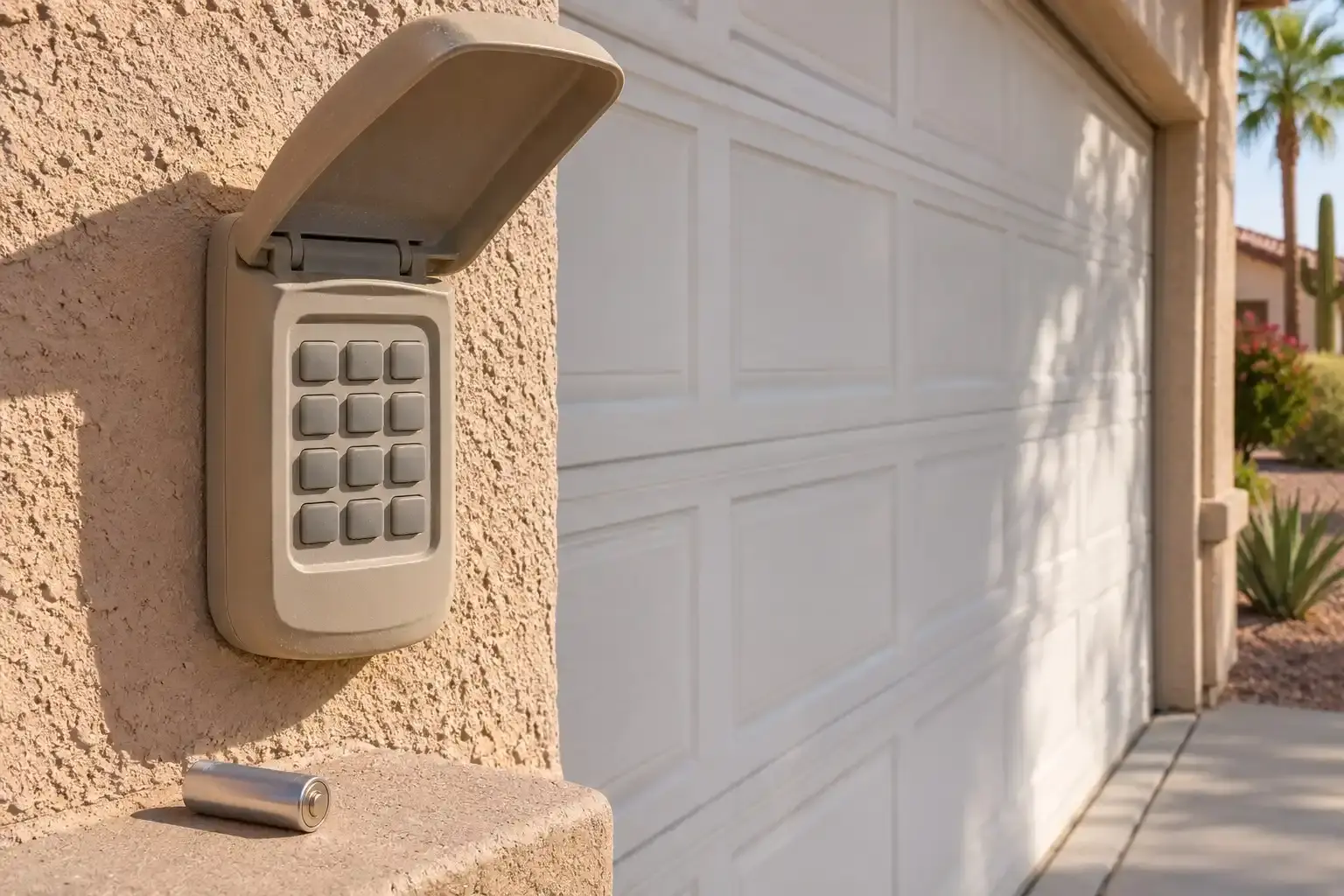
A garage door keypad not working usually comes down to a weak battery, a lost pairing, or heat and dust, and most fixes take only minutes. You punch in the code, nothing happens, and the car stays in the driveway. Before you assume the opener has failed, run through these checks in order.
Seven Fixes to Try in Order
- Replace the battery. Wireless keypads run on a small battery. Direct Arizona sun shortens the keypad’s life, so check the battery type printed inside the cover and swap it first.
- Stand closer. Press the code from a few feet away. If it works up close, range or interference is the problem, not the keypad itself.
- Unlock the wall control. Many wall controls have a lock button that blocks keypads and remotes. If the opener light blinks but the door will not move, the lock may be switched on.
- Clean and dry the keypad. Dust, monsoon moisture, and sticky buttons can stop key presses from registering. Wipe the face with a dry cloth and press each button firmly.
- Re-enter or reset the PIN. Some keypads lose their code when the battery comes out. Follow the keypad’s instructions to set a fresh PIN, and avoid obvious numbers like a street address.
- Pair the keypad again. Press the Learn button on the opener, then enter the PIN on the keypad within the time window your model allows. Button color and timing vary by brand, so keep the opener manual close.
- Swap the opener bulb. Some LED bulbs can interfere with the opener’s receiver. Try a different bulb and test the keypad again.
Why Keypads Fail Early in Arizona
A keypad mounted on a stucco wall facing west takes hours of direct sun every day. Heat shortens battery life, fades button labels, and can warp the plastic housing. Fine desert dust works its way under the buttons, and a monsoon storm can push water behind the faceplate.
If your keypad sits in full sun, consider shading it or replacing the battery on a schedule rather than waiting for a failure. A keypad that fails every few months usually has a moisture problem, not a battery problem.
How to Tell Whether the Keypad or the Opener Is at Fault
Next, test the remote and the wall button. If those work and only the keypad fails, the keypad is the culprit. If everything fails, look at the opener’s power supply, receiver, and logic board.
Our guide to garage door opener troubleshooting covers dead batteries, signal range, and tripped breakers. Check the outlet and the breaker before you call anyone. A garage door keypad not working, along with a humming motor and a stuck door, points to a mechanical problem rather than a signal issue.
Signs the Keypad Is Fine, but the Signal Is Not
A keypad is a small radio transmitter. It sends a coded signal to the receiver in the opener, and the opener decides whether to move the door. If the receiver is blocked, damaged, or out of sync, even a perfect keypad will seem dead.
Watch the opener’s light when you press a button. A flash or click means the signal arrived and the problem sits further down the chain. No reaction at all points back to the keypad, its battery, or its pairing. That small observation saves a lot of guessing.
Keep the Keypad Working Longer
Prevention is cheap. A few habits stop most repeat failures:
- Shade the keypad from direct afternoon sun where you can.
- Replace the battery on a regular schedule instead of waiting for it to fail.
- Wipe the faceplate with a dry cloth and avoid spraying water at it.
- Change the PIN whenever you share it with a contractor, guest, or former tenant.
- Keep a spare remote so a keypad failure never locks you out.
When the Problem Is Bigger Than the Keypad
Stop troubleshooting if the door reverses, hangs crooked, or moves only a few inches. Those signs can mean a broken spring or cable, and tension hardware can cause serious injury. Do not touch springs, cables, or the bracket at the bottom of the door.
On Track Garage Door Service installs, programs, and repairs garage door openers across Mesa and the East Valley. If the fixes above did not work, our garage door opener repair page explains how we handle opener problems, and you can contact our team to set up a visit.
Frequently Asked Questions
Why did my keypad stop working suddenly?
A sudden failure is most often a dead battery, a power interruption, or a lock setting on the wall control. Heat and moisture can also trigger it.
How do I reset a garage door keypad?
Most keypads reset by setting a new PIN and then pressing the Learn button on the opener. Steps differ by brand, so check your manual.
Does a new battery erase the code?
Some models keep the PIN in memory, and others forget it. If the keypad does not respond after a battery change, re-enter the PIN and pair it again.
Will the keypad work if the remote does not?
Yes. The keypad and each remote are separate transmitters paired to the opener so that one can fail while the other works.
Can heat damage a keypad?
Yes. Long hours of direct sun can shorten battery life, fade labels, and warp the housing. Shade and routine battery changes help.
Should I change my PIN regularly?
Change it whenever someone who no longer needs access knows it. Avoid simple sequences or numbers tied to your address.
Can I replace a keypad myself?
Pairing a new keypad is a reasonable task with the opener manual. Anything involving springs, cables, or opener wiring should go to a technician.
Need Professional Garage Door Service?
If you're experiencing garage door issues or need professional maintenance, our licensed team is here to help.


