
Hydraulic vs Mechanical Dock Levelers: Which Fits Your Warehouse?
Not sure which dock leveler types suit your warehouse? Compare hydraulic, mechanical, and air-powered levelers by load capacity, maintenance, and day-to-day use.
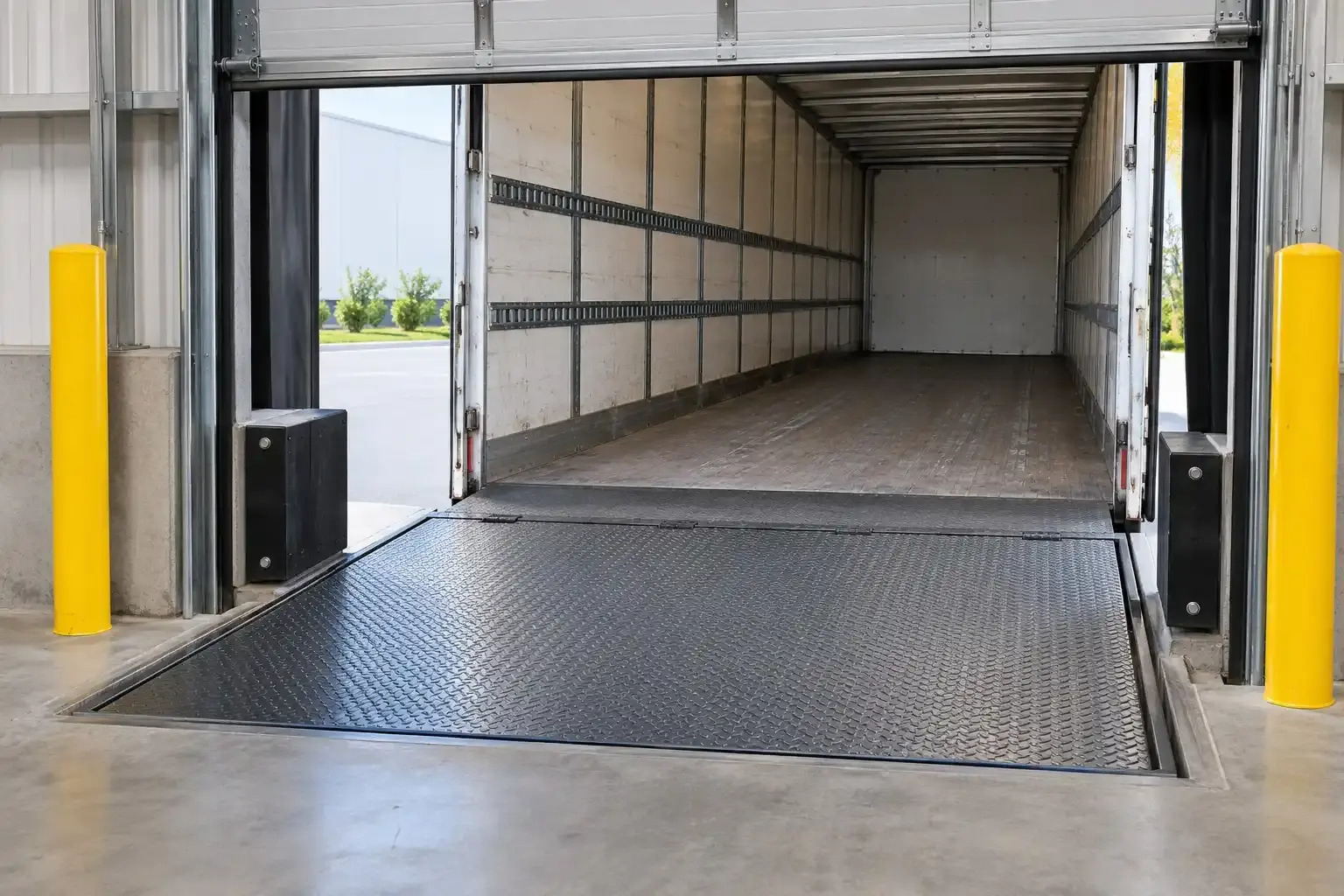
Short answer: mechanical levelers fit standard loads and simple upkeep, while hydraulic levelers suit heavy, constant traffic. The right pick depends on how many trucks you load, what you move, and who maintains the equipment. These are the main dock leveler types and how they differ.
The Main Dock Leveler Types at a Glance
| Type | Best for | Watch for |
|---|---|---|
| Mechanical | Standard loads, simpler systems | Springs, chains, and lip hardware wear |
| Hydraulic | Heavy, high-frequency loading | Pump, hose, and brake upkeep |
| Air-powered | Food-grade and clean settings | Air bag and supply condition |
| Vertical storing | Sealing the dock when idle | Space and design requirements |
On Track’s dock levelers, seals and shelters page describes hydraulic levelers for heavy use, mechanical levelers for standard loads, air-powered levelers for food-grade sites, and vertical storing models.
How a Mechanical Leveler Works
A mechanical leveler uses springs and a release mechanism. An operator pulls a chain to free the platform, and the ramp rises, then rests on the truck bed as the driver backs in. Fewer moving parts mean less to troubleshoot.
That simplicity has limits. Springs, chains, and lip hardware wear with time. One job on our dock page involved a mechanical leveler with a disconnected chain, a bent spring, and a broken kickout bolt, all of which a technician replaced to restore the lip action.
How a Hydraulic Leveler Works
A hydraulic leveler uses a powered pump to raise the platform and extend the lip with the push of a button. This reduces physical effort and provides smoother control for heavy, frequent loading.
The trade-off is system upkeep. Pumps, hoses, and brakes need periodic checks, and a failing hydraulic brake can leave a platform unable to hold position. If a hydraulic leveler drifts, stop using it and call a technician.
Air-Powered and Vertical Storing Levelers
Air-powered levelers use an air bag to raise the platform, which is why they show up in food-grade settings. Vertical storing levelers sit upright when not in use, which helps close the dock opening between trucks. Each suits a narrower job than the two workhorses above, so treat them as specialty options.
Capacity, Size, and Range
Before you compare models, check three numbers: capacity, platform size, and working range. On Track’s dock page lists capacities from 25,000 to 80,000 pounds, platform sizes from 6’ x 6’ to 8’ x 10’, and a working range up to 24 inches above and below dock level.
Match those to your real traffic. A loaded forklift crossing the platform all day is a different duty than occasional pallet jacks. Undersizing is the costly mistake, because it shortens equipment life and raises risk.
Where Levelers Usually Fail
Each type tends to break in its own way:
- Mechanical: worn springs, loose chains, bent lip hardware, broken kickout parts
- Hydraulic: brake problems, pump or hose leaks, a platform that will not hold position
- All types: damaged lips from trailer impacts and debris in the pit
Catching a small issue early keeps a dock position in service. Waiting until the platform fails often means a truck stuck at the door.
Choosing for Your Facility
Ask these questions:
- How many trucks load at this door each day?
- What is the heaviest load crossing the platform?
- Who will inspect and maintain the equipment?
- Is the space temperature-controlled or food-grade?
Remember the whole dock. A leveler works alongside seals, shelters, and doors. For example, high-speed roll-up doors and dock seals help control air and weather at the opening.
A Quick Decision Guide
Pick mechanical if your loads are standard, your dock runs at a steady pace, and you want fewer powered parts to service. Pick hydraulic if trucks cycle all day, loads are heavy, or you want push-button control that reduces operator strain. Pick air-powered when the environment demands it, such as food-grade settings. If you are torn, share your daily truck count and heaviest load with a technician, and let the numbers decide.
Repair or Replace?
Repair makes sense when the platform is structurally sound, and the failure is a single part, such as a spring, chain, or lip component. Replacement deserves a look when the deck is damaged, parts are hard to source, or the leveler no longer fits your loads.
Ask a technician to inspect the pit, frame, and platform before deciding. A replacement matched to current traffic can cost less in downtime than patching a unit that keeps failing.
Plan for Upkeep, Not Just Purchase
Any leveler fails faster without maintenance. Look at lip action, safety legs, hold-downs, springs, and hydraulic components on a regular schedule. Keep the pit clean, since debris can jam moving parts, and log every repair so patterns show up. Operators should also know to stop using a unit that behaves oddly instead of working around it. Our commercial door maintenance page covers preventive programs that reduce downtime.
Talk to Us About Your Dock
Reading about dock leveler types only goes so far. Request a quote, and we’ll review your dock layout, trucks, and loads before recommending hydraulic, mechanical, or air-powered equipment.
Frequently Asked Questions
Which is better, hydraulic or mechanical?
Neither wins every time. Hydraulic suits heavy, constant traffic, and mechanical suits standard loads with simpler upkeep.
Are mechanical levelers cheaper to maintain?
They have fewer powered parts, but springs and chains still wear. Maintenance needs depend on use.
What is an air-powered leveler?
It uses an air bag to raise the platform. It is often chosen for food-grade sites.
How do I know a leveler needs repair?
Warning signs include a lip that will not extend, a platform that drifts, loud noises, or visible damage.
What capacity do I need?
Base it on your heaviest regular load, including the forklift, and leave margin. A technician can confirm the rating for your pit and trailers.
Can a leveler be replaced without redoing the dock?
Sometimes. A technician first needs to measure the pit and review load requirements.
Need Professional Garage Door Service?
If you're experiencing garage door issues or need professional maintenance, our licensed team is here to help.


