
Cold Storage Doors: Choosing the Right Door for Arizona Facilities
Cold storage doors do more than keep cold air in. Compare door types, Arizona heat and dust concerns, and what to ask before you choose one for your facility.
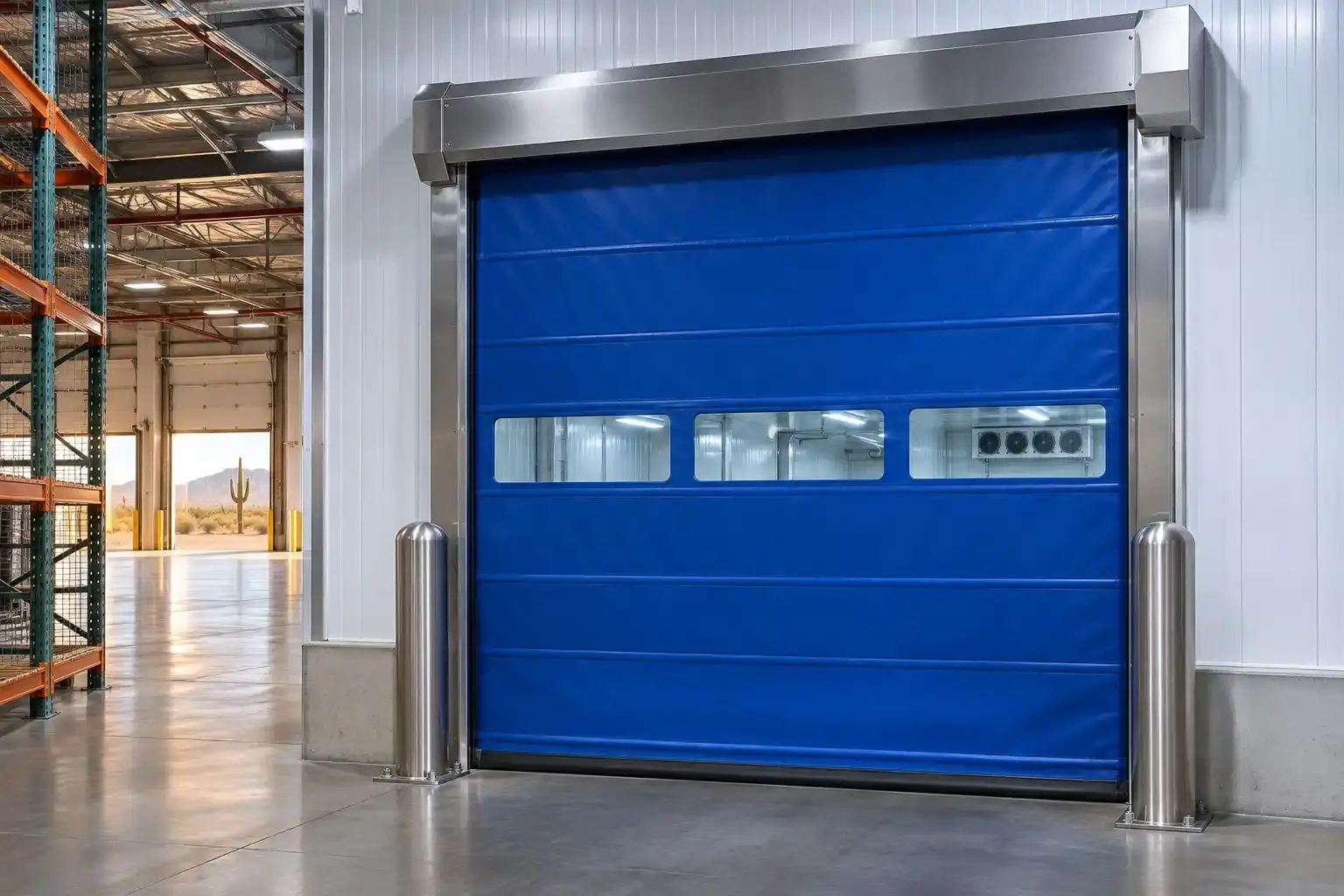
Picture a forklift clipping a freezer door at the end of a long shift. The curtain jams in the header, warm air pours in, and product sits exposed while someone hunts for a technician. Cold storage doors take that kind of abuse every day, and in Arizona they fight outdoor heat on the other side. Here is how to choose one that holds up.
What Makes a Cold Storage Door Different
A cold storage door separates two very different temperatures and opens hundreds of times a day. Three jobs matter most: limiting air exchange, surviving impacts, and cycling reliably in cold conditions.
Standard overhead doors can do part of that work. Facilities that move product constantly usually look at doors built for speed and sealing instead, since every second a door stays open lets warm air in.
Door Types Compared
| Door type | Best for | Main trade-off |
|---|---|---|
| High-speed roll-up | Busy freezer and cooler openings | More components to maintain |
| Insulated sectional | Dock doors and exterior openings | Slower cycle than a high-speed door |
| Rolling steel | Security and exterior protection | Less insulating on its own |
High-speed doors open and close quickly, reducing air exchange and keeping indoor temperatures steadier. On Track’s high-speed roll-up doors page describes fast-cycling designs for temperature-controlled storage, food processing, and distribution settings.
Insulated sectional doors use multi-panel construction. Our sectional garage doors page explains how insulated panels help control temperature in warehouses and service bays.
Arizona Conditions That Shape the Choice
Cold storage doors in Arizona work against a harsh outdoor environment. Summer heat raises the temperature difference at every opening. Fine dust gets into tracks, guides, and sensors, and condensation forms where cold and hot air meet.
Ask these questions before you buy:
- How many cycles will this opening see per day?
- Will forklifts or pallet jacks hit the door?
- Does the opening face the sun or a loading yard?
- Are sensors and seals easy to reach for service?
Protecting Product, Energy, and People
A freezer or cooler door earns its keep in three ways. It protects product by holding temperature steady, it limits the energy lost every time the opening cycles, and it protects workers by cutting down on fog, ice, and wet floors near the threshold.
Speed matters, but so does toughness. On Track describes its high-speed doors as springless, with motion sensors and automatic safety features. Impact-tolerant curtain designs recover better when a forklift misses its mark. If your openings take frequent hits, ask how the door handles a collision and how quickly a technician can restore it.
Questions to Ask Before You Commit
Walk each opening with your contractor and answer these together:
- What is the temperature on each side of the door?
- How many cycles will it make in a normal day?
- Is the opening for people, pallets, or both?
- Will the door face the weather or a dock?
- What happens to operations if this door is down for a day?
That last question shapes the maintenance plan more than any spec sheet. A critical opening deserves a service schedule and a plan for fast repairs.
Think About the Whole Opening, Not Only the Door
The door is one piece of a system. Where trucks dock against a cold room, seals and shelters close the gap around the trailer, and a leveler bridges the platform. A fast door paired with a poor seal still leaks air.
Check the guides, headers, and thresholds too. Ice and debris building up at the bottom of an opening can stop a door from closing tightly. A short daily visual check by staff, plus scheduled technician visits, catches these early.
Keeping Freezer and Cooler Doors Running
Even a well-chosen door fails when it is ignored. Worn rollers, misaligned guides, faulty bottom sensing edges, and control errors are common service calls on high-speed doors. A scheduled inspection catches those before they close an opening.
On Track’s commercial door maintenance programs include track alignment, sensor calibration, and safety checks. Pair the door with proper dock seals where trucks meet the building, and look at our dock levelers, seals, and shelters page for options that suit temperature-controlled spaces.
Before You Decide
Not sure whether your facility needs a high-speed door, an insulated sectional, or both? Browse our full commercial door services, then request a quote so a technician can look at your openings in person.
Frequently Asked Questions
What are cold storage doors?
Cold storage doors separate refrigerated or frozen areas from warmer spaces while handling frequent traffic.
Are high-speed doors better for cold storage?
They often fit busy openings because they spend less time open. The best choice still depends on cycle counts, impacts, and the opening’s size.
Do freezer and cooler openings need seals?
Yes. Seals and shelters around the door and dock help keep temperatures steady and block weather and pests.
How often should these doors be inspected?
Busy doors benefit from scheduled preventive inspections. Frequency depends on cycle count and the operating conditions.
Do these doors help with energy use?
A fast door that stays open less time reduces air exchange between areas, which helps keep temperatures steadier. Results depend on traffic and installation.
What should staff report right away?
Slow cycling, strange noises, error lights, ice at the threshold, and any impact damage. Small signs often come before a full failure.
Who handles repairs on high-speed doors?
A technician familiar with the door’s controls and sensors. Common service items include error codes, limit resets, and sensing edges.
Can a damaged curtain be repaired?
Often it can be freed, realigned, or reattached. A technician should inspect it first, since a jammed curtain can be unsafe to force.
Need Professional Garage Door Service?
If you're experiencing garage door issues or need professional maintenance, our licensed team is here to help.


