
Loading Dock Safety: Equipment Checklist for Arizona Warehouses
Use this loading dock safety checklist to inspect levelers, doors, seals, lighting, and floors in your Arizona warehouse before an incident forces your hand.
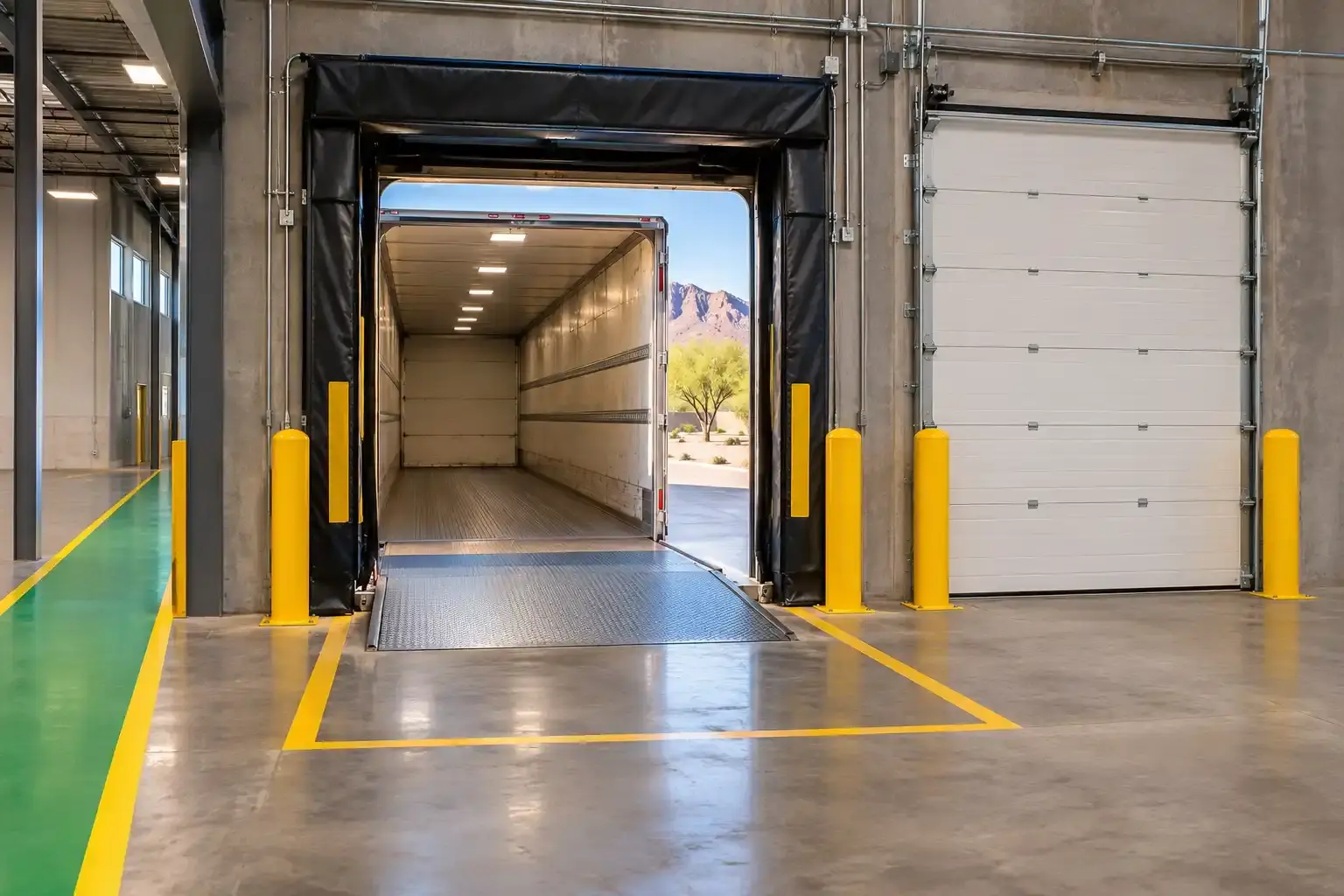
Most dock injuries do not start with a dramatic failure. They start with a sticky lip, a floor that stays wet, or a door nobody reported. This loading dock safety checklist helps you spot those problems early, one piece of equipment at a time.
Before the Shift: Walk the Dock
Take five minutes at the start of each shift and look for:
Clear floor around every dock door, free of debris and spills
Working lights over the dock and trailer interior
Visible edge markings and floor striping
No leaking fluid under levelers or doors
Wheel chocks or vehicle restraints in place when trailers are loading
Report anything unusual immediately. A short log beats a memory.
Dock Levelers
The leveler bridges the gap between dock and trailer, so a problem here affects everyone.
Platform rises and returns to the stored position correctly.
Lip extends fully and rests securely on the trailer bed.
Safety legs and lip locks function
No bent springs, loose chains, or cracked welds
Hydraulic units hold position without drifting.
Our dock levelers, seals, and shelters page lists auto return-to-dock, lip locks, and safety legs among the features to look for.
Dock Doors and Openers
Doors take constant abuse at a busy dock.
Door travels smoothly and stops where it should
Sensors and safety edges respond when tested.
Springs, cables, and rollers show no visible fraying or wear.
Emergency release works
Impact damage reported and inspected
Springs and cables are under extreme tension. Never adjust them yourself. See our commercial door maintenance programs, which include safety system checks and sensor alignment.
Seals, Shelters, and Weather Protection
Seals and shelters keep rain, wind, dust, and pests out and help maintain a steady temperature. Check them for tears, compressed foam, and gaps around the trailer. Arizona sun breaks down exposed materials, so inspect them after hot months and monsoon storms.
Trailer Restraint and Vehicle Control
A trailer that creeps away during loading is one of the most dangerous dock events. Wheel chocks or vehicle restraints, clear communication with drivers, and a rule that nobody loads until the trailer is secured all cut that risk.
Chocks or restraints are available and used every time.
Drivers and dock staff agree on a simple signal.
No loading begins until the trailer is confirmed secure.
Check trailer floors before heavy forklift loads cross them.
Forklift and Foot Traffic
Separate pedestrian walkways from forklift lanes wherever the layout allows. Use mirrors at blind corners, keep aisles open, and set a speed limit near the doors. Most near misses happen where foot and powered traffic cross.
Arizona Seasonal Checks
Summer and monsoon season change the checklist. Heat dries out and cracks seals, dust gathers in tracks and pits, and stormwater can pool near the dock. After a monsoon, look at drainage, door tracks, and leveler pits before you resume normal loading.
Floors, Lighting, and Visibility
A leveler only helps if people can see and walk safely. Confirm slip-resistant surfaces, proper drainage, and bright lighting. Mark pedestrian walkways separately from forklift paths.
Training Topics Worth Repeating
Short, regular refreshers work better than one long annual session. Cover:
- Safe leveler operation and what to do if it drifts
- Trailer securing and driver communication.
- Forklift lanes, speed, and pedestrian rules
- How to report damaged doors, seals, or lights
- Emergency stops and who to call
Emergency Readiness
Safety also means knowing what to do when something goes wrong. Post clear instructions near each dock position for a stuck door, a drifting leveler, or an injury. Keep emergency release points unobstructed, and make sure staff know how to tag out damaged equipment so nobody uses it by mistake.
Doors need special care. A door that fails midway can trap a pallet jack or block an exit path. On Track’s commercial service program includes emergency release tests and photo-eye alignment, which are exactly the items a dock team should confirm before something fails.
Lighting and Communication
Good light changes behavior. Workers see hazards sooner, drivers judge distance better, and inspections are more reliable. Test dock lights, trailer lights, and any indicator lights that signal truck status. Replace dead fixtures quickly, because a dark dock position invites shortcuts.
Clear communication matters as much as light. Use a simple, consistent signal system between drivers and dock staff, and keep it posted where everyone can see it.
Train, Record, and Follow Up
Equipment alone is not enough. Train workers on dock procedures and keep inspection records. Fix reported issues quickly and document the repair. Keep a simple log of each inspection, the problem found, who reported it, and the date it was corrected. Over a few months, that log shows which doors and levelers fail most often, so you can plan repairs before they interrupt a busy day.
Get a Second Set of Eyes
Checklist items turning up repeat problems? Our team can review your dock equipment. Start by reading about our commercial door services, then request a site visit.
Frequently Asked Questions
What is the most important loading dock safety item?
No single item covers everything—levelers, doors, restraints, lighting, and training all matter together.
How often should a dock be inspected?
Do a quick walk-through each shift, and schedule regular professional inspections.
What should I do if a leveler drifts or sticks?
Stop using that dock position and tag it out. Call a qualified technician for repair.
Do I need vehicle restraints or just chocks?
Either can help, depending on your operation and local requirements. Confirm what applies to your site with your safety lead.
How do monsoons affect dock safety?
Stormwater, dust, and debris can affect floors, pits, and door tracks. Inspect the dock after major storms.
Do dock seals affect safety?
Yes. They limit weather, pests, and debris at the opening, which helps keep the area dry and clear.
Who should repair dock equipment?
A trained technician. Do not try to adjust springs, cables, or hydraulic parts yourself.
Need Professional Garage Door Service?
If you're experiencing garage door issues or need professional maintenance, our licensed team is here to help.


