
How to Open a Garage Door Manually When the Power Is Out
Learn how to open garage door manually in a power outage: find the release cord, lift with care, spot a broken spring, and reconnect the opener at home.
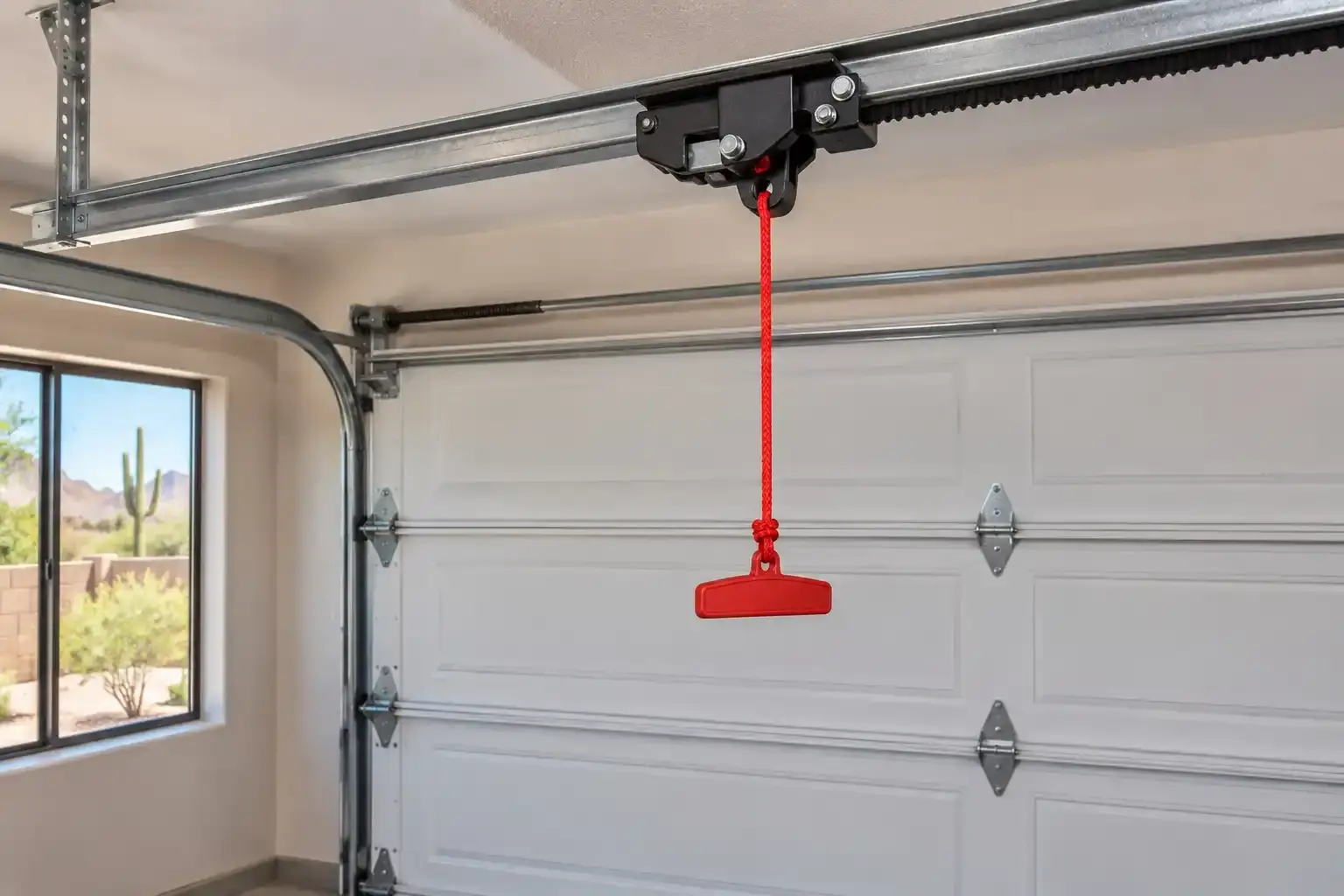
The lights are off, your car is inside, and the opener will not budge. Searching “how to open garage door manually” usually means exactly that. If the door is fully closed and appears undamaged, follow your opener manual to use the emergency release, then lift carefully with both hands. Stop at once if the door feels unusually heavy or moves unevenly.
How to Open Garage Door Manually, Step by Step
Check your owner’s manual for your model. These steps cover the common setup.
- Clear the area and keep children and pets away.
- Start with the door fully closed. Do not release a stuck, half-open, crooked, or visibly damaged door; call a technician instead.
- Disconnect electrical power to the opener as instructed by the manufacturer so it cannot start unexpectedly when power returns.
- Find the red emergency cord hanging from the trolley on the opener rail. Pull it only in the direction specified in your manual; release mechanisms differ by model.
- Check that any manual door lock is disengaged. Grip the designated lifting handle with both hands and lift evenly. Stop if the door feels unusually heavy, catches, or moves unevenly.
- Keep fingers off panel joints, hinges, and tracks. Keep your body clear of the opening as the door moves. Do not pass through until the door is fully open and remains stable.
- When power returns, close the door safely and follow the manual to reconnect the trolley and restore power. Some trolleys re-engage when the opener runs; others require a manual reset.
Why Does the Release Cord Work?
The opener does not carry the door’s weight. The spring system counterbalances it, which is why a healthy door lifts by hand with moderate effort. Pulling the cord separates the door from the motor, so you are only moving a counterbalanced door.
That also explains the warning in step two. If a spring has broken, the door loses its counterbalance, and releasing it from the opener while it is raised can let it fall.
How Can You Tell Something Is Wrong?
A balanced door lifts with moderate effort and generally remains near the position specified by the manufacturer. If it feels extremely heavy, drops, or will not rise, a spring or another lifting-system component may have failed. Do not deliberately release a door that feels difficult to control.
Do not force it. The door can weigh hundreds of pounds, and springs hold dangerous tension. Compare what you see with On Track’s list of broken garage door spring signs. If a spring is the cause, the spring replacement service is the right next call.
Want a hands-on walkthrough? On Track says its tune-up visit includes showing homeowners how to run the door manually during outages.
What If the Door Will Not Move at All?
Check that the garage door lock, if you have one, is disengaged. Then look for a bent track or a roller that has jumped the channel. A jammed door, rather than a heavy one, needs a technician, since forcing it can bend the track further.
On Track provides 24/7 emergency service for stuck doors when you cannot wait for daylight.
Can You Hold the Door Open Once It Is Up?
A properly balanced door should remain fully open according to the manufacturer’s guidance. If it creeps down or will not stay open, do not pass underneath it or improvise supports with locking pliers or other tools.
An unstable door may have a spring or hardware problem. Keep people clear and arrange professional assistance. Do not try to catch a falling door.
What Should You Never Do?
A few mistakes cause most of the injuries:
- Never stand or reach under a door that is being raised by hand.
- Never put fingers between sections, hinges, or rollers.
- Never pull the release on a half-open door with a suspect spring.
- Never force a door that resists or feels jammed.
- Never leave kids or pets unsupervised near a disconnected door.
If any of those feel necessary, the real answer is to wait for a professional.
How Does Battery Backup Change Things?
A battery-backup opener keeps working when the grid doesn’t, so the cord becomes a last resort instead of routine. It will not fix a broken spring, but it removes the most common reason people need to lift a door by hand.
If you are weighing a new opener anyway, ask about backup power. Availability, compatibility, and runtime depend on the model and battery condition.
How Can You Prepare for the Next Outage?
- Confirm that you can safely reach the release cord and that its length follows the manufacturer’s instructions. Do not improvise an extension.
- Practice according to the manual, with the door closed and the car out, only when the door is undamaged and operates normally.
- Consider a battery-backup opener if storms knock out power often.
On Track lists battery-backup openers among its LiftMaster, Genie, and Sommer options. Learning how to open garage door manually once, on a calm afternoon, beats learning it in a dark garage during a monsoon.
Frequently Asked Questions
Is it safe to open a garage door manually?
Usually, when the door is balanced, fully closed before release, and undamaged. If it feels very heavy or uneven, stop and call a technician.
Will pulling the release cord damage the opener?
The cord is made for this, but pull gently and follow the manual.
Why is my door so heavy without power?
The springs counterbalance the door’s weight even during an outage. A heavy feel may indicate a worn or broken spring or another mechanical problem.
How do I reconnect the door afterward?
Close the door safely, follow your manual to re-latch the trolley and restore power, then test the opener as instructed. If it does not catch, ask a pro.
Can I use the release if the door is already open?
Start with the door fully closed. If it is stuck open or you suspect spring or cable damage, leave the release alone and call a technician; the door could fall.
Should I leave the door disconnected overnight?
A disconnected door may be liftable from outside unless separately secured. Follow the manufacturer’s instructions to reconnect it or secure it with an approved manual lock. Disengage that lock before using the opener again.
Need Professional Garage Door Service?
If you're experiencing garage door issues or need professional maintenance, our licensed team is here to help.


