
Garage Door Inspection Checklist for Snowbirds Returning to Mesa
Returning to Mesa after summer? Use this garage door inspection checklist to spot heat damage, worn seals, opener issues, and safety concerns.
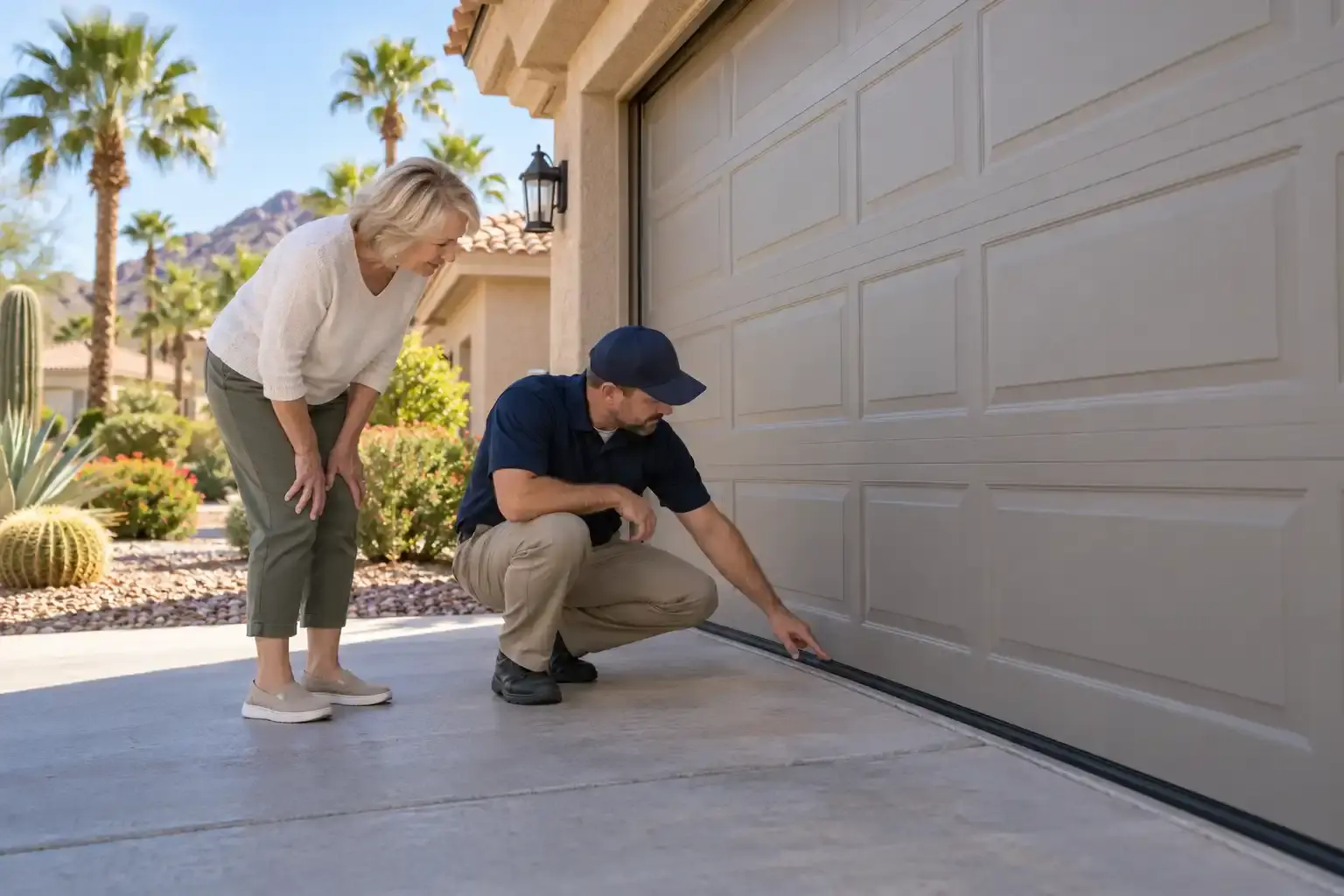
Returning to Mesa after spending the summer somewhere cooler should feel like a homecoming, not the start of a repair list. After months away, your garage door may have endured intense heat, dust storms, and monsoon winds without regular use.
Before relying on it again, take time to check its condition. A garage door inspection can help you identify visible damage, catch operating problems, and determine whether professional maintenance is needed.
Quick Overview: What to Check First
- Inspect panels for dents, cracks, rust, or warping.
- Check weatherstripping for gaps and sun damage.
- Look for debris or damage around tracks and rollers.
- Test the opener and safety features.
- Look for visible spring or cable damage without touching these components.
If the door is crooked, has a broken spring, or makes unusual noises, stop using it and arrange a professional inspection.
1. Inspect the Door Panels
Start with the door closed. Examine both sides for dents, cracks, loose hardware, and signs of deterioration.
Mesa’s summer sun can fade finishes and contribute to material wear. Strong winds may also blow debris against the door or affect its alignment.
Look for warped panels, rust on metal surfaces, splintering on wooden doors, or uneven gaps between sections. Minor cosmetic damage may not require replacement, but extensive damage can affect the door’s strength and operation.
If the door looks uneven or appears to have shifted, have a technician assess it before operating it.
2. Check the Weatherstripping
The bottom seal and surrounding weatherstripping help keep out dust, insects, and moisture. Arizona’s heat and sunlight can make rubber seals brittle, cracked, or loose.
Check for daylight around the closed door, gaps beneath the bottom seal, and weatherstripping that has pulled away from the frame. Dust collecting near the garage entrance can also indicate a poor seal.
Replace worn seals when needed. However, if a gap results from an uneven door rather than damaged rubber, have the alignment checked before replacing parts.
3. Examine Tracks, Rollers, and Hinges
Dust and debris can accumulate in garage door tracks while a home sits empty. Inspect the visible tracks for dirt, bent sections, loose-looking brackets, and scrape marks.
Look for cracked roller wheels, excessive wobbling, rusty hinges, or signs of unusual wear. You can remove loose debris from accessible areas, but do not loosen brackets or attempt to realign tracks yourself.
If a roller has come out of its track or the door appears off track, leave it alone and call a professional.
4. Look for Spring and Cable Damage
Springs and lift cables help support the door’s weight. Damaged components can make the door dangerous to operate.
From a safe distance, look for a visible gap in a spring, frayed cables, dangling wires, or a door that sits crooked. Do not touch, adjust, or attempt to repair springs and cables because they operate under substantial tension.
If you notice damage, do not use the door until a qualified technician has inspected the system.
5. Test the Garage Door Opener
If the door appears intact and properly aligned, test the wall control, remote, and keypad if available. Replace weak remote batteries if necessary and consult the opener manual if a control does not respond.
During a normal operating cycle, listen for grinding, rattling, hesitation, or unexpected stops. A motor that runs without moving the door may indicate a mechanical problem.
Check the photo-eye sensors near the bottom of the tracks. If their lenses are dusty, gently wipe them with a soft, dry cloth.
Never keep operating the opener to force a stuck door to move. Stop if the door strains, moves unevenly, or repeatedly reverses.
6. Verify the Safety Features
A door that opens and closes is not necessarily safe. Check that the photo-eye sensors face one another and appear to work according to the opener’s manual.
Test the automatic reversal feature using the manufacturer’s specified procedure. Never place your hands, feet, or another part of your body beneath a moving door.
If the door fails a safety test, stop using the automatic system until the issue has been corrected. Ask a technician to test the system if you are unsure how to do so safely.
7. Check the Garage Before Moving Back In
Your garage may need attention beyond the door itself. Look for water stains, windblown debris, pest activity, and unusual odors. Check the floor near the entrance for signs of water intrusion following monsoon storms.
Make sure the door’s path is clear, stored items cannot fall into moving components, and nothing blocks the safety sensors. Confirm that the emergency release remains accessible.
Before relying on the garage for daily access, make sure the door closes fully and operates without unexplained gaps or interruptions.
Frequently Asked Questions
How often should I schedule a garage door inspection?
A yearly professional inspection is a useful baseline for many residential doors. Follow the manufacturer’s maintenance recommendations and schedule additional service if problems develop.
Can Arizona heat damage a garage door?
Yes. Prolonged heat and sunlight can contribute to deteriorating seals, finish damage, and component wear. Dust and monsoon debris can also affect moving parts and sensors.
Is it safe to use my garage door after months away?
Only if it appears undamaged and operates correctly. Inspect it first, and stop if you notice crooked movement, unusual noises, or visible spring or cable damage.
Should I lubricate my garage door after returning?
Use a garage-door-approved lubricant only on components specified by the manufacturer. Keep tracks free of lubricant unless the manual specifically instructs otherwise.
Get Your Mesa Home Ready for Your Return
Before settling back into your Mesa home, inspect your garage door, test its safety features, and address anything unusual. If you notice damage or unreliable operation, contact OnTrack Garage Door Service to arrange an inspection or maintenance service in Mesa and the surrounding East Valley.
Need Professional Garage Door Service?
If you're experiencing garage door issues or need professional maintenance, our licensed team is here to help.


