
How Long Do Garage Door Openers Last? Signs Yours Is Near the End
How long do garage door openers last? Learn the average lifespan, signs it’s time to replace yours, and tips to extend it. On Track, serving Arizona.
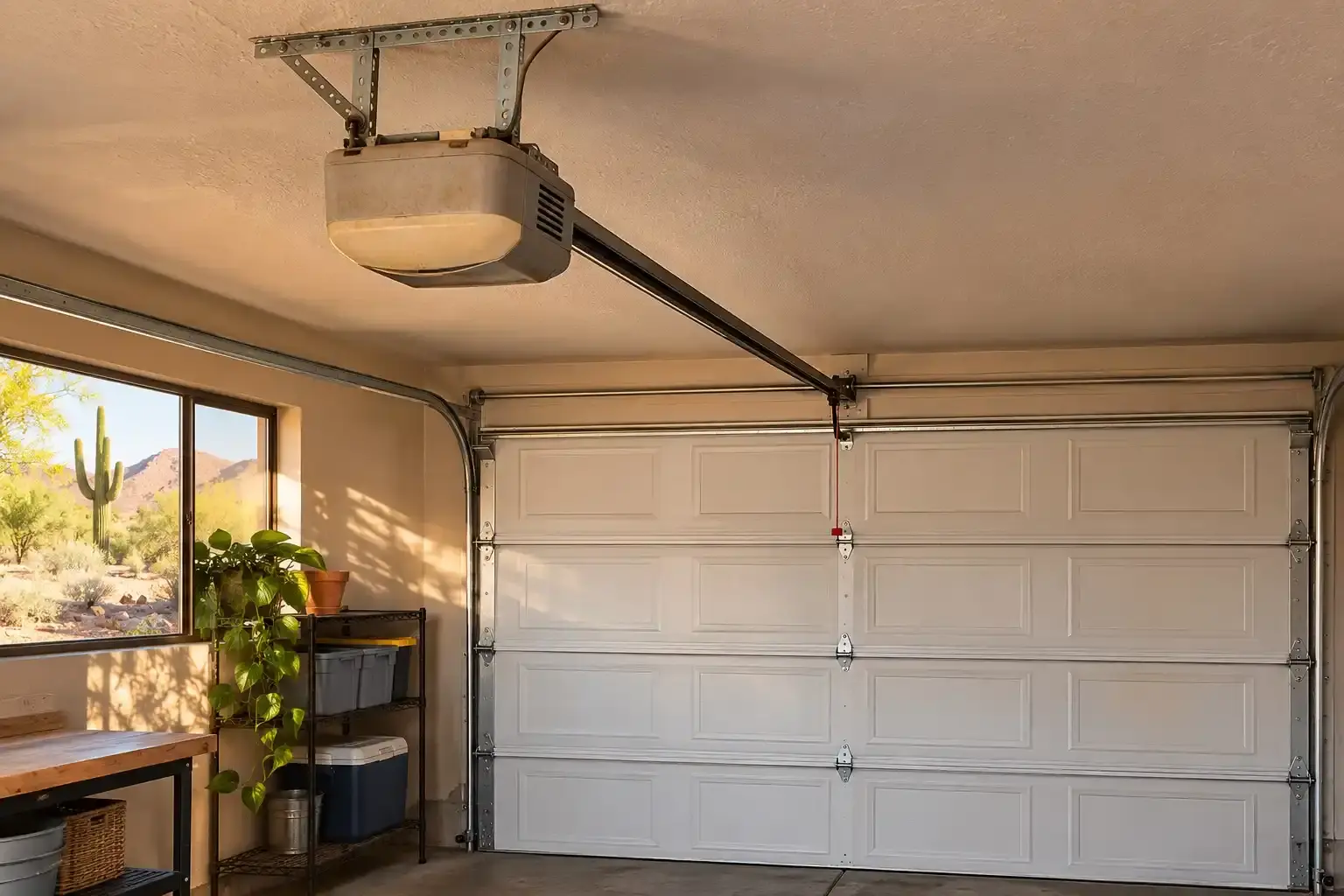
How long do garage door openers last? As a general guide, most run about 10 to 15 years, though heat, daily use, and a neglected door can cut that short. If yours is slowing down, groaning, or acting moody, the signs below help you choose between a repair and a replacement.
What Decides How Long an Opener Lasts?
Age is only part of the story. Four things matter more than the date on the box:
- Heat. Mesa garages can reach 120°F to 140°F in summer. Many openers have a thermal overload switch that shuts the motor off to protect it, and repeated shutdowns add strain.
- Daily cycles. A household with several drivers wears out gears and belts faster.
- Door balance. The opener guides the door. Springs do the lifting, so a weak or broken spring forces the motor to haul dead weight.
- Power events. A surge can fry a logic board long before the motor wears out.
So how long do garage door openers last in the desert? Often toward the shorter end of that range, especially in an uninsulated, west-facing garage. An insulated door lowers the ambient temperature and takes some load off the motor.
Is It the Opener or the Door?
This question saves the most money. When a door will not open, people often blame the opener, but the springs are usually the real problem. A broken spring leaves the opener trying to lift the entire door, and its safety system stops it after a few inches.
Disconnect the opener and lift the door by hand. If it feels extremely heavy, call about the springs first. If it moves easily, the opener is the likelier suspect.
What Are the Warning Signs the End Is Near?
One symptom is a nuisance. Several together usually mean replacement:
- The door stops halfway or reverses for no reason.
- Grinding, rattling, or a motor that hums without moving
- Remotes and wall buttons working only some of the time.
- Repeated limit and force resets
- Parts that are hard to find for an older model
- No rolling-code security, which makes older units easier to compromise
On Track’s piece on keeping your opener from being hacked explains why that last point matters.
Do Different Drive Types Age Differently?
They do. Chain-drive openers are proven and economical, but chains stretch and need tension adjustments over the years. Belt drives run quieter and tend to hold up well, though belts can wear and eventually need replacing.
Direct-drive models have a single moving part, which helps with long-term reliability and vibration. Whatever the type, the motor and logic board take the same punishment from Arizona heat.
What Can Extend an Opener’s Life?
You cannot stop aging, but you can slow it:
- Keep the door balanced and lubricated so the motor never has to fight it.
- Insulate the door to lower the garage temperature.
- Avoid back-to-back cycles during the hottest part of the afternoon.
- Add surge protection against power events.
- Book a yearly inspection that tests limits, force settings, and safety sensors.
Small habits matter here. A motor that never overheats rarely wears out early.
Repair or Replace?
Repair when the problem is a sensor, remote, limit setting, or worn part on a fairly young unit. Replace when the opener is past its prime, repairs are piling up, or the motor routinely overheats.
Rule out the door first. A failed spring can mimic a dead opener, and On Track’s opener troubleshooting guide covers the common causes.
What Does Replacing an Opener Involve?
The technician matches the new unit to your door weight, ceiling clearance, and noise needs. On Track installs LiftMaster, Genie, and Sommer openers, and its site describes belt, chain, direct-drive, and wall-mount options.
Installation includes mounting the rail and motor, connecting the safety sensors, programming remotes and keypads, and testing the reverse function. Ask the installer to confirm the door is balanced first, since a new opener won’t fix a worn spring.
What Should You Look for in the Next One?
- Belt drive: the quietest standard option, good beside living spaces
- Chain drive: economical and proven, better for detached garages
- Direct drive: very quiet with few moving parts
- Battery backup: keeps the door working through outages
On Track’s comparison of opener types goes deeper.
Not sure which side of the line yours sits on? Start with the opener repair page if it still works, or browse opener options if it is time to move on.
Frequently Asked Questions
Does Arizona heat shorten opener life?
It can. Hot garages stress motors and electronics, and thermal shutdowns can signal the unit is working too hard.
Is a 15-year-old opener worth repairing?
Sometimes, but parts and modern security features become issues. Weigh repair frequency against replacement.
Can a broken spring damage an opener?
Yes. The motor was not built to lift the full weight of the door.
How long do garage door openers last with regular maintenance?
Usually longer. Lubrication, a balanced door, and a yearly inspection reduce the load.
Why did my opener stop working in the afternoon heat?
A thermal overload switch may have shut the motor down. It usually resets after 20 to 30 minutes, but frequent shutdowns signal strain.
Do I need battery backup?
It is worth considering if outages or storms are a concern, since it keeps the door moving without power.
Need Professional Garage Door Service?
If you're experiencing garage door issues or need professional maintenance, our licensed team is here to help.


