
Garage Door Roller Replacement Cost: Nylon vs Steel Rollers
Garage door roller replacement cost depends on roller type, count, and door size. Compare nylon and steel rollers and spot wear before the track suffers.
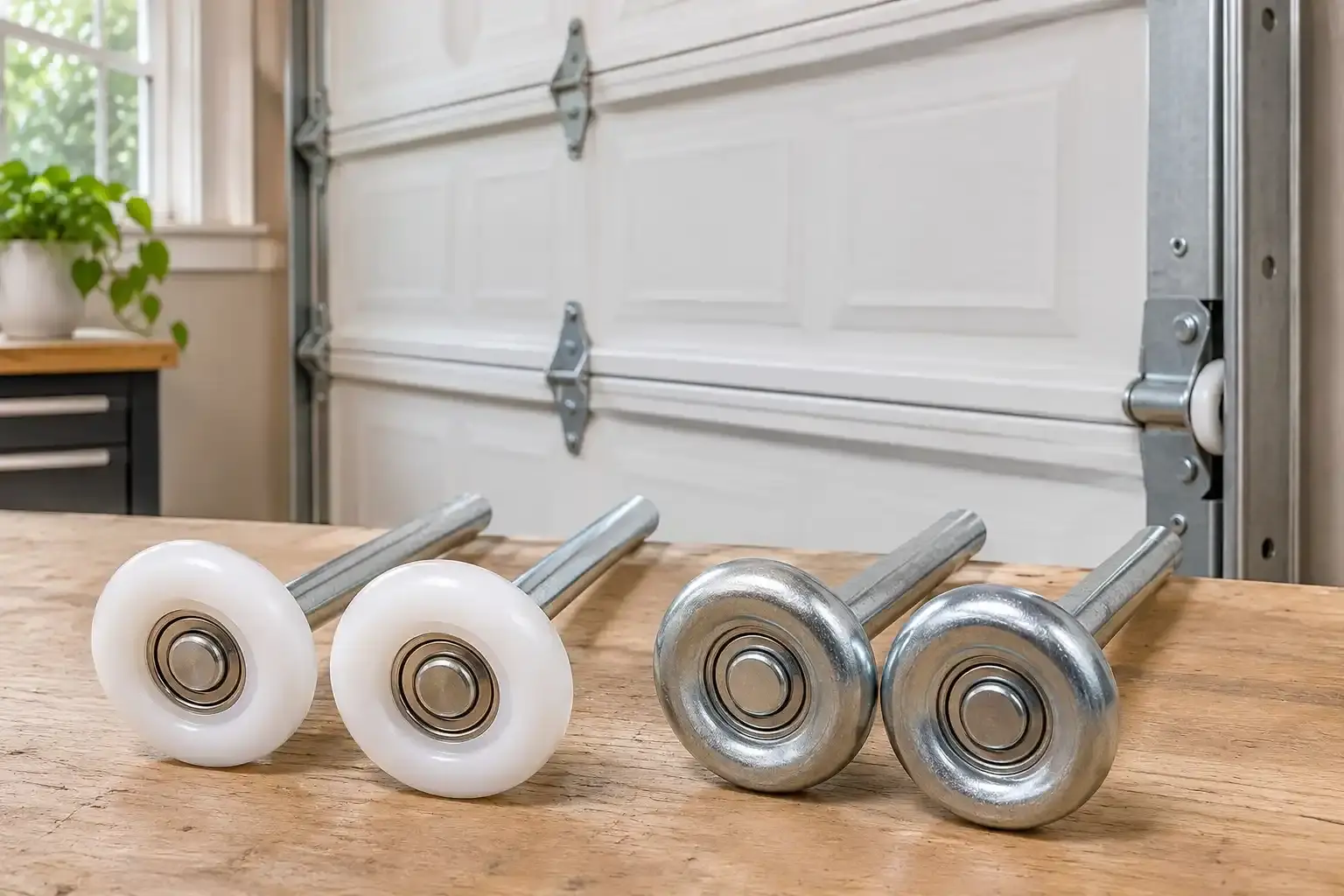
Rollers are small, cheap, and ignored until the door starts grinding. Garage door roller replacement cost is usually one of the gentler lines on a repair bill, but the type you choose affects both noise level and how long the next set lasts.
How Do Nylon and Steel Rollers Compare?
As a general rule, nylon runs quieter, and steel tolerates rough use. Bearings matter as much as the wheel material, so check what is inside either one.
| Nylon | Steel | |
|---|---|---|
| Noise | Quieter | Louder in most setups |
| Track contact | Softer on the track | More metal-on-metal |
| Best fit | Attached garages, bedrooms nearby | Heavy doors, workshop use |
| Watch for | Cracking under heat | Rust and dry bearings |
On Track’s quiet opener tips point to nylon when noise is the complaint, and its recent door installs list premium nylon rollers as standard hardware.
What Sets the Price?
Garage door roller replacement cost depends on the number of rollers, nylon versus steel, bearing type, and door size. A two-car door has more rollers than a single. It also depends on whether the track needs work at the same time.
The job is typically a one- to two-hour visit. On Track’s Arizona repair cost guide breaks down roller work alongside other repairs.
How Do You Know Rollers Are Finished?
Your ears usually tell you first. Look and listen for:
- Grinding, squealing, or rattling during travel
- Jerky or shuddering movement
- Wobbling wheels or visible cracks and flat spots
- Scuffed or scored track channels
If the noise is the main complaint, On Track’s guide to a loud garage door covers the usual causes. Dust is a frequent culprit here. After a monsoon dust storm, fine grit coats rollers and tracks and acts like sandpaper, so cleaning and lubrication sometimes buys time before replacement.
What Does a Roller Replacement Involve?
The visit is shorter than most people expect. The technician inspects the rollers, hinges, and track, swaps out the worn rollers, and checks the door afterward. Because the track and rollers work as a pair, the technician also checks the track.
On Track’s site lists roller inspection as part of its track repair work. That is useful, because a scored track channel will chew through a brand new set of rollers if it goes unnoticed.
Which Roller Should You Pick?
Match the roller to the way you live with the door. If the garage sits under a bedroom or shares a wall with living space, quiet matters most, and nylon is the common answer. If the door is heavy or the garage doubles as a workshop, a sturdier steel roller with good bearings may be a better fit.
Bearings deserve a question, no matter which material you choose. Ask whether the bearings are sealed or exposed, since dust and heat are hard on exposed ones.
Can Lubrication Replace New Rollers?
Sometimes, for a while. If the noise is dry friction, cleaning the track and lubricating the rollers with a silicone-based product can quiet things down. Grease won’t fix a roller that is cracked, flat, or wobbling.
Never lubricate in a way that attracts dust. Monsoon grit sticks to heavy grease and turns it into paste, so a light silicone spray is usually the better choice.
What Happens If You Ignore Them?
A worn roller does not fail politely. It binds in the channel, scores the track, and loads extra strain onto the opener. Eventually it can pop out, which is one way a door ends up off track.
That chain is why a cheap part deserves attention. Replacing rollers early protects the track, hinges, and motor.
What Should You Ask Before Booking?
A few questions keep the estimate honest:
- How many rollers are being replaced, and what type are they?
- Are the bearings sealed or exposed?
- Will the technician inspect the track and hinges during the same visit?
- Is the door lubricated and balance-tested afterward?
Roller work also fits neatly into a garage door tune-up, which already includes roller lubrication and a track inspection.
Why Is Roller Replacement Not a DIY Job?
The hardware around the rollers sits under cable and spring tension. On Track calls it a dangerous, difficult repair that trained technicians should do. Worn rollers also chew up the track, so replacing them early protects a more expensive part.
Hearing grinding now? A track and roller inspection is part of On Track’s track repair service, so one visit covers both.
Frequently Asked Questions
How long do garage door rollers last?
It varies with use, lubrication, and heat. Dry, dusty Arizona garages shorten the life of any roller, and a door cycled several times a day wears out faster than one used occasionally.
Should I replace all the rollers at once?
Usually yes. Rollers wear at similar rates, so replacing one invites a second call soon, and doing the full set in one visit costs less labor time overall.
Does lubrication help rollers last longer?
Yes. A silicone-based or lithium lubricant reduces friction, and a tune-up includes it.
Can bad rollers damage the track?
They can. Worn rollers wear the track channel and can contribute to a door slipping off.
Are nylon rollers worth it for a quieter door?
For most attached garages, yes. They are generally quieter and gentler on the track, though bearing quality still matters as much as the wheel material.
What is the typical garage door roller replacement cost?
It depends on roller count, type, and door size, so ask for a written estimate after inspection.
Need Professional Garage Door Service?
If you're experiencing garage door issues or need professional maintenance, our licensed team is here to help.


